


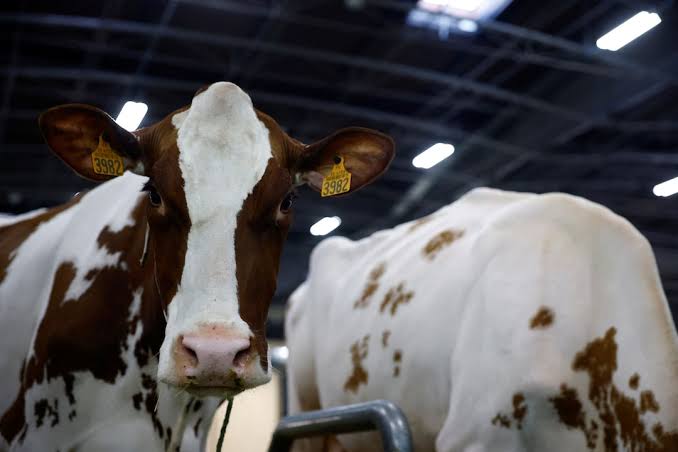
France on Thursday reported the first known human case of the Shamonda virus, which is usually found in livestock, in a hospital patient who died. Authorities said there was no risk to the general population. The government said in a statement that the victim was suspected to have been bitten by a midge carrying the virus in eastern France, where it circulated among animals this spring and summer.

A French health ministry official said the man had been hospitalised in Lyon with an unrelated serious disease. Local newspaper Le Progres reported that he was in his 60s and lived in the Lyon area. Gregory Emery, head of France’s health directorate, said the case was unprecedented from a scientific and virological point of view and was linked to the man’s severely weakened immune system. “From a medical and public health point of view, there is no alert and no crisis,” he told reporters. Emery said there had been no report of cattle-to-human or human-to-human transmission.
The World Health Organization said it was in contact with French authorities. It described the case as isolated and unlikely to lead to wider spread at this time, based on current knowledge of closely related viruses.
Dr Ben Brennan of the University of Glasgow’s Centre for Virus Research said past cases of comparable viruses suggested limited risks to human health. He cited the Schmallenberg virus, which affected European livestock more than a decade ago without causing human cases, and the Cristoli virus, which was linked to the death of a fragile patient in France without further cases.
Transmitted by biting midges, Shamonda is most commonly found in cattle but has also been detected in horses, alpaca, sheep and goats, according to the World Organisation for Animal Health. It is not classified as a disease under the EU Animal Health Law and is not subject to official surveillance or control measures.
First identified in Nigeria in the mid-1960s, it was confirmed in Europe in late July after tests on sick cattle in southern Germany, Switzerland and eastern France. It has since been detected in several other European countries. Infected cattle show diarrhoea, weakness and loss of appetite, and less often fever. A study of nine French dairy farms found milk production fell by up to 75%.