


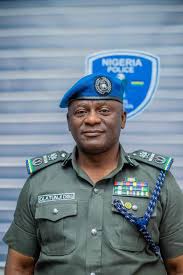

On February 25, 2026, Acting Inspector-General of Police Olatunji Rilwan Disu assumed office as Nigeria’s 23rd indigenous Inspector-General of Police. The handover was orderly. The press release was polished. The resume was impressive. But for millions of Nigerians who have lived under the shadow of police brutality, extrajudicial killings, arbitrary detention, and the unhealed wounds of the #EndSARS era, a change of baton at Force Headquarters is not, by itself, a reason to celebrate. It is, however, a reason to speak plainly , and to set expectations early.
This editorial is that conversation.
The Man Behind the Title
Ag. IGP Disu brings credentials that, on paper, are formidable. A career spanning over three decades, he has served as Commander of the Rapid Response Squad (RRS) in Lagos, Commissioner of Police in both Rivers State and the FCT, and most recently as AIG overseeing the Force Criminal Investigation Department (FCID) Annex in Alagbon, Lagos. He holds multiple postgraduate degrees, has led Nigeria’s first police contingent to the African Union Mission in Sudan, and is, by all accounts, a man of professional discipline, a third-degree black belt in Judo, no less.
But the Nigerian police institution does not suffer from a shortage of decorated officers. What it has suffered, persistently and catastrophically, is a deficit of accountability. The question before the Nigerian public is not whether Ag. IGP Disu is accomplished. It is whether he is willing to do what his predecessors largely failed to do: make the Nigeria Police Force answerable to the people it is meant to serve.
The Weight of Inheritance
The Nigeria Police Force that Ag. IGP Disu inherits is one still struggling with the consequences of a broken contract with the public. The October 2020 #EndSARS protests — triggered by years of documented abuse, torture, and killings by operatives of the Special Anti-Robbery Squad (SARS) , ended with the Lekki Toll Gate shootings and a nation in grief. SARS was officially disbanded. But dissolution of a unit does not dissolve a culture. Many Nigerians report that abusive practices have persisted under new unit names and old personnel.
Judicial panels of inquiry were set up across states to document and redress violations. Years later, the implementation of their recommendations remains patchy at best, tokenistic at worst. Victims have waited. Compensation has been slow. Prosecutions of offending officers have been rare. The signal sent to the Force has been one of impunity.
It is into this unresolved landscape that Ag. IGP Disu now steps. His opening statement — pledging to consolidate reforms, strengthen community partnerships, and advance the Force’s mandate of protecting lives and property , is welcome. But the Nigerian people have heard similar commitments before. Words, no matter how sincerely delivered at an assumption-of-duty ceremony, are not policy. They are not accountability. They are a starting point.
Five Human Rights Imperatives for the New IGP
The Nigerian Observatory for Human Rights calls on Ag. IGP Disu to act decisively in the following areas:
1. FULL IMPLEMENTATION OF #ENDSARS PANEL RECOMMENDATIONS
Across the country, state judicial panels documented hundreds of cases of torture, unlawful killings, and property destruction by SARS and other police units. We call on the new IGP to personally champion the full payment of compensation to victims, the prosecution of indicted officers, and the public reporting of outcomes. Partial compliance is complicity.
2. END TORTURE IN POLICE CUSTODY
Nigeria is a signatory to the UN Convention Against Torture. Yet credible reports of beatings, stress positions, and psychological abuse in police cells continue to flow into human rights organisations across the country. The new IGP must issue unambiguous directives criminalising torture within the Force, establish independent inspection mechanisms for detention facilities, and ensure that officers who torture face career-ending consequences — not quiet transfers.
3. STOP THE HARASSMENT OF JOURNALISTS, ACTIVISTS AND PROTESTERS
The pattern of arresting journalists covering sensitive stories, detaining human rights defenders without charge, and deploying officers to disperse lawful protests is one the NOHR has documented repeatedly. The right to peaceful assembly and freedom of expression are constitutional guarantees. Police officers who violate them must be held to account. We call on Ag. IGP Disu to issue and enforce clear standing orders protecting journalists and peaceful protesters.
4. CURB EXTORTION AND ILLEGAL CHECKPOINTS
Every Nigerian who travels by road knows the experience of illegal police checkpoints and officers soliciting bribes. This is not a minor inconvenience , it is a systemic violation of citizen’s rights, a drain on the economy, and a fundamental corruption of what a police force should be. Ag. IGP Disu has investigative expertise at the highest levels of the Force. He knows where these chains of extortion lead. We urge him to break them.
5. BUILD GENUINE COMMUNITY POLICING — NOT SURVEILLANCE
The new IGP has spoken about strengthening community partnerships. We welcome this. But community policing must not become a euphemism for informant networks or neighbourhood surveillance that disproportionately targets the poor, young men, and minority communities. True community policing is built on trust, transparency, and co-governance of public safety — not on deploying more armed officers into communities that already fear the uniform.
A Particular Word on His Background
It is worth noting, with deliberate care, that Ag. IGP Disu’s postings include significant time in Rivers State, one of the states where police-community tensions have historically been most acute , as well as command of the Rapid Response Squad in Lagos, a unit that has not been without controversy in its own right. We do not raise this to condemn, but to acknowledge that the new IGP arrives with first-hand knowledge of the most difficult terrain in Nigerian policing. That is potentially an asset. He has seen complexity up close. He knows what failure looks like, and what it costs.
The question is what he will do with that knowledge.
To the Officers and Men of the Force
This editorial is addressed primarily to the new IGP, but we also speak to the officers and rank-and-file of the Nigeria Police Force. The image of Nigerian policing has been damaged, often, we acknowledge, by a small proportion of officers whose conduct tars the many who serve with integrity and at genuine personal risk. Better leadership at the top can only succeed if officers at every level choose professionalism over predation, dignity over impunity.
A police force that protects human rights is not a weaker police force. It is a more effective one, trusted by the communities it serves, capable of genuine intelligence cooperation, and respected in ways that no amount of firearms or checkpoints can manufacture.
Our Verdict: Cautious Hope, Active Vigilance
The Nigerian Observatory for Human Rights does not believe in giving honeymoon periods to those entrusted with coercive power. Every week of inaction on human rights is a week in which Nigerians suffer real, measurable harm.
And yet, we are not without hope. Ag. IGP Disu’s background in criminal investigation and intelligence, rather than purely administrative or ceremonial roles , suggests a man who understands that security problems require thought, not just force. His international exposure, including to peacekeeping in Darfur, may have expanded his conception of what professional policing demands.
We will be watching. We will be documenting. We will be reporting, as we always have. And we will give credit where it is due, and raise alarm where alarm is warranted.
Nigeria deserves a police force that it can call in times of trouble without fear. That is not a radical demand. It is the minimum standard of a functioning society. Ag. IGP Disu now holds the authority, and bears the responsibility , to move Nigeria meaningfully closer to that standard.
The baton has been passed. The clock is running.
— The Editorial Board
Nigerian Observatory for Human Rights (NOHR)
Abuja, Nigeria | February 27, 2026