

Nigeria’s Bloodiest Week: How Late July Became a Recurring Season of State Violence

From a bloodless coup to Boko Haram’s bloody birth, mass executions and a damning inquiry into a 2015 massacre , the last week of July has repeatedly marked turning points in Nigeria’s human rights record
In the archive of Nigeria’s human rights history, the last week of July carries an unusual weight. Across five decades, from the era of military rule to the age of Boko Haram , this single week has repeatedly been the setting for events that exposed the state’s uneasy relationship with due process, accountability, and the rule of law.
A Coup Without Bullets, and a Purge That Followed
It began, in this particular history, on July 29, 1975. General Yakubu Gowon, then in his ninth year as head of state, was attending an Organisation of African Unity summit in Kampala, Uganda, when a radio broadcast back home announced that he had been overthrown. Ugandan leader Idi Amin was reportedly the one who broke the news to him. Not a single shot was fired in Lagos; Brigadier Murtala Mohammed assumed power in what remains one of the country’s rare bloodless transitions.
The calm, however, did not extend to what followed. Mohammed moved swiftly to retire hundreds of public officials and military officers, a purge many Nigerians welcomed at the time as a break from years of drift, but one that also proceeded with little of the process or appeal that due-process norms would ordinarily demand. It set an early template: dramatic change at the top, little scrutiny of the methods beneath it.
1997: Executions Without Appeal
Two decades later, on July 31, 1997, six men convicted in the notorious “Otokoto 7” ritual-killing case were executed by firing squad in Owerri. Their trial had been conducted by a tribunal that included a serving military officer and a police superintendent sitting as judges, and when the men sought to challenge their conviction, their appeal was not heard by any court, but decided by the state’s own military administrator. The U.S. State Department’s human rights report for that year flagged the case as a stark illustration of how far Nigeria’s military-era justice system had drifted from ordinary due process, even in matters of life and death.
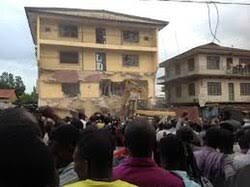
The Otokoto executions were not an isolated data point. Amnesty International’s own accounting of that period recorded a broader surge in executions following the November 1993 coup, including a reported firing-squad execution of 43 prisoners in Lagos before a crowd of roughly a thousand spectators, carried out under Robbery and Firearms Tribunals that, again, denied condemned prisoners any right of appeal to a higher court, in violation of Nigeria’s obligations under the International Covenant on Civil and Political Rights and the African Charter on Human and Peoples’ Rights.
2009: The Week Boko Haram Was Born
No single week in this history looms larger than late July 2009. It began on July 26 in Bauchi, when roughly 70 members of a little-known Islamist sect attacked a police station with grenades and guns, retaliation for the group’s mid-June clash with police and the arrest of several of its leaders. Over the following two nights, the group struck police stations and government buildings in Maiduguri, and the violence spread rapidly to Potiskum in Yobe State and Wudil in Kano State.
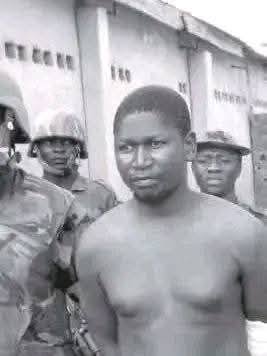
The state’s response was overwhelming. Between July 28 and July 31, the military shelled the sect’s headquarters and an adjoining mosque in Maiduguri; more than 800 people, including sect members and civilians trapped in the crossfire, were killed in that assault alone, drawing international criticism over the scale of force used against a lightly armed group. Across the full four-state uprising, more than 700 people died, with hurried mass burials making an accurate count all but impossible; the Red Cross estimated roughly 4,000 people were displaced.
Then came the act that many historians and rights monitors regard as the true point of no return. On July 30, 2009, security forces arrested the sect’s founding leader, Mohammed Yusuf. Rather than face trial, he was handed over by military personnel to police in Maiduguri and summarily executed in custody, a killing that violated his constitutional right to a fair trial. That sect was Boko Haram. Its founder’s extrajudicial killing, rights researchers have long argued, did not end the movement but radicalized it, helping set the stage for an insurgency that would go on to claim tens of thousands of lives across Nigeria’s northeast in the years that followed.
The U.S. State Department’s human rights report for 2009 characterized the security forces’ broader conduct that week, the executions, the indiscriminate arrests, the use of excessive force, in terms rarely applied so directly to a sitting government’s own security agencies.
2016: A Mass Grave, Confirmed
The last major entry in this week’s history arrived on July 31, 2016, when Kaduna State’s government made public the findings of a judicial commission of inquiry into one of the most contested episodes of the past decade: the Nigerian Army’s December 2015 clash with members of the Islamic Movement in Nigeria (IMN) in Zaria. The commission’s report confirmed what rights groups had alleged for months; the existence of a mass grave containing the remains of 347 IMN members, and concluded that the army had used excessive and disproportionate force. It recommended an independent federal investigation and the prosecution of those found responsible.
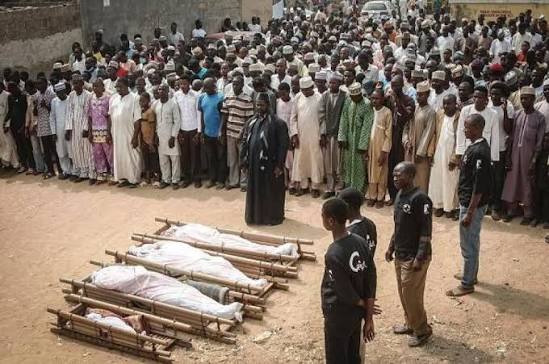
Nearly a decade on, that recommendation remains, by most public accounts, unfulfilled, a pattern that recurs through nearly every entry in this week’s history: documentation without prosecution, findings without consequence.
A Week Worth Remembering
Taken together, these events, separated by decades but bound to the same seven days on the calendar, trace a throughline in Nigeria’s human rights story: extrajudicial killings dressed up as law enforcement, tribunals that mimic courts without their safeguards, and official inquiries whose findings rarely translate into accountability. For an institution like NOHR, and for the wider human rights community, revisiting this week is not an exercise in nostalgia. It is a reminder of how often the machinery of the state has been permitted to act first and answer for its conduct, if at all, much later, or never.