


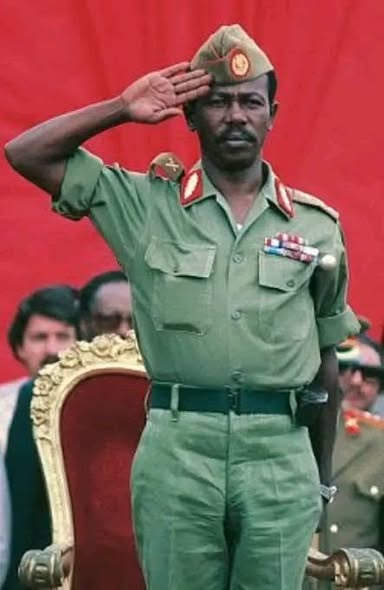
Mengistu Haile Mariam, the former Ethiopian military ruler once dubbed “the Butcher of Addis Ababa,” has spent more than three decades as a fugitive from justice, living in relative comfort in Zimbabwe while evading a death sentence handed down by his home country.

Mengistu rose to power as an army colonel following the 1974 revolution that toppled Emperor Haile Selassie. He went on to rule Ethiopia for seventeen years, attempting to remake the country along Soviet-style socialist lines, but instead plunged it into a brutal campaign of political repression that is estimated to have killed around 150,000 people. That period, known as the “Red Terror,” earned him his grim nickname and left a legacy of trauma that Ethiopia continues to grapple with today.
As rebel forces closed in on Addis Ababa in 1991, Mengistu’s government collapsed. He fled the country in May 1991, an exit that effectively brought the Ethiopian Civil War to an abrupt end. He initially fled to Kenya before securing asylum in Zimbabwe under President Robert Mugabe, who reportedly admired his anti-Western, socialist orientation. He has resided in Harare ever since, in what has been described as a walled compound, under the protection of Zimbabwean state security. There have been occasional reports over the years of him spending time elsewhere, including in the resort town of Kariba, but Harare has remained his primary base.
Back in Ethiopia, prosecutors pursued Mengistu through a lengthy legal process even in his absence. In December 2006, an Ethiopian Federal High Court convicted him in absentia of genocide for crimes committed during the Red Terror. He was initially sentenced to life imprisonment in January 2007, a sentence that was later upgraded to death on appeal in 2008. Dozens of his former officials were tried alongside him in the same sprawling, twelve-year case.
Despite the severity of the verdict, Zimbabwe has never handed him over. Zimbabwean officials have repeatedly stated that the government granted him asylum and that this position has not changed, arguing that Zimbabwe is a sovereign state with no control over another country’s judicial proceedings. A former Zimbabwean information minister justified the refusal by pointing to Mengistu’s status as a refugee under the relevant United Nations convention. Reports suggest he has continued to receive state housing and other benefits during his exile, and Zimbabwe has at times described him as a “guest of the state.”
The question of his fate has resurfaced periodically. In 2022, Zimbabwe’s foreign minister suggested that if Ethiopia formally requested his extradition, “appropriate steps” would be taken in response, a comment that stirred speculation about a possible policy shift. Critics, however, dismissed the remark as political theater rather than a genuine signal of change, noting Harare’s long track record of shielding him. Ties between Ethiopian officials and Mengistu have occasionally surfaced in embarrassing ways, as when a former Ethiopian prime minister briefly posted, then deleted, a photo of himself smiling alongside the exiled dictator in 2018. Mengistu has largely stayed out of public view during his exile, issuing only rare statements defending his record and his government’s actions. He is reportedly now in his late eighties, and his prolonged, comfortable exile despite an outstanding death sentence has become something of a symbol of the limits of transitional justice in Africa. He has also, at times, traveled outside Zimbabwe with the government’s cooperation; on at least one occasion he reportedly went to South Africa for medical treatment on a diplomatic passport, with Harare securing assurances he would be permitted to return unhindered.
More than thirty years after fleeing Addis Ababa, Mengistu remains a living reminder of how political protection can outlast even the gravest of international condemnations, his case still cited as an unresolved chapter in Ethiopia’s pursuit of accountability for the Red Terror.