
Advertisement
  • HOME
  • BREAKING NEWS
  • OPINION
  • INTERVIEWS
  • BOOK REVIEW
  • FEATURES
  • HEALTH
  • HUMAN RIGHTS
    • Child Rights
    • Climate Justice
    • Death In Custody
    • Death Penalty
    • Disability
    • Disappearances
    • Environment
    • Extra-Judicial Executions
    • Justice
    • Labour
    • Pre-trial Detention
    • Prison Reform
    • SOGI
    • Torture
    • Women Rights
  • INTERNATIONAL
  • INVESTIGATIONS
  • MEDIA
    • Documents
    • Infographics
    • Photos
    • Video
  • OPPORTUNITIES
  • SPECIAL INVESTIGATION
  • ABOUT US
No Result
View All Result
  • HOME
  • BREAKING NEWS
  • OPINION
  • INTERVIEWS
  • BOOK REVIEW
  • FEATURES
  • HEALTH
  • HUMAN RIGHTS
    • Child Rights
    • Climate Justice
    • Death In Custody
    • Death Penalty
    • Disability
    • Disappearances
    • Environment
    • Extra-Judicial Executions
    • Justice
    • Labour
    • Pre-trial Detention
    • Prison Reform
    • SOGI
    • Torture
    • Women Rights
  • INTERNATIONAL
  • INVESTIGATIONS
  • MEDIA
    • Documents
    • Infographics
    • Photos
    • Video
  • OPPORTUNITIES
  • SPECIAL INVESTIGATION
  • ABOUT US
No Result
View All Result
Nigerian Observatory For Human Rights
No Result
View All Result
Home INTERNATIONAL

UN Votes To Recognise Enslavement Of Africans As ‘Gravest Crime Against Humanity’

Editor by Editor
March 26, 2026
in INTERNATIONAL
0
UN Votes To Recognise Enslavement Of Africans As ‘Gravest Crime Against Humanity’
0
SHARES
6
VIEWS
Share on FacebookShare on Twitter

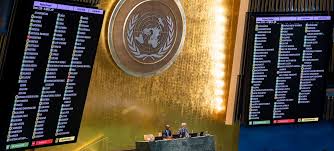
The United Nations General Assembly has voted to recognise the enslavement of Africans during the transatlantic slave trade as “the gravest crime against humanity”, a move advocates hope will pave the way for healing and justice.

The resolution – proposed by Ghana – called for this designation, while also urging UN member states to consider apologising for the slave trade and contributing to a reparations fund. It does not mention a specific amount of money. The proposal was adopted with 123 votes in favour and three against – the United States, Israel and Argentina.

Fifty-two countries abstained, including the United Kingdom and European Union member states.Countries like the UK have long rejected calls to pay reparations, saying today’s institutions cannot be held responsible for past wrongs.

Unlike UN Security Council resolutions, those from the General Assembly are not legally binding, though they carry the weight of global opinion. “Let it be recorded that when history beckoned, we did what was right for the memory of the millions who suffered the indignity of the slave trade and those who continue to suffer racial discrimination,” Ghana’s President John Mahama told the assembly ahead of the vote. ”The adoption of this resolution serves as a safeguard against forgetting. It also challenges the enduring scars of slavery,” he said.

Earlier, his foreign minister, Samuel Okudzeto Ablakwa, told the BBC’s Newsday programme: “We are demanding compensation – and let us be clear, African leaders are not asking for money for themselves.  “We want justice for the victims and causes to be supported, educational and endowment funds, skills training funds.”

The campaign for reparations has gained significant momentum in recent years – “reparatory justice” was the African Union’s official theme for 2025  Ablakwa also said that, with the resolution, Ghana was not ranking its pain above anyone else’s, but simply documenting a historical fact.

Between 1500 and 1800, around 12-15 million people were captured in Africa and taken to the Americas where they were forced to work as slaves. It is estimated that over two million people died on the journey. The resolution, backed by the African Union and the Caribbean Community, states that the consequences of slavery persist in the form of racial inequalities and underdevelopment “affecting Africans and people of African descent in all parts of the world”.


Tags: SlaveryUn
Previous Post

UN migration agency says 2025 was deadliest year on Red Sea migrant route

Next Post

FLASHBACK: Why I Disobeyed Some Court Orders —Ministerial Nominee, Malami 

Editor

Editor

Next Post
FLASHBACK: Why I Disobeyed Some Court Orders —Ministerial Nominee, Malami 

FLASHBACK: Why I Disobeyed Some Court Orders —Ministerial Nominee, Malami 

Leave a Reply Cancel reply

Your email address will not be published. Required fields are marked *

Follow Us on Social Media

Facebook Twitter Youtube
  • About
  • Contact

Ⓒ2022 All Rights Reserved By  NIGERIAN OBSERVATORY FOR HUMAN RIGHTS.

No Result
View All Result
  • HOME
  • BREAKING NEWS
  • OPINION
  • INTERVIEWS
  • BOOK REVIEW
  • FEATURES
  • HEALTH
  • HUMAN RIGHTS
    • Child Rights
    • Climate Justice
    • Death In Custody
    • Death Penalty
    • Disability
    • Disappearances
    • Environment
    • Extra-Judicial Executions
    • Justice
    • Labour
    • Pre-trial Detention
    • Prison Reform
    • SOGI
    • Torture
    • Women Rights
  • INTERNATIONAL
  • INVESTIGATIONS
  • MEDIA
    • Documents
    • Infographics
    • Photos
    • Video
  • OPPORTUNITIES
  • SPECIAL INVESTIGATION
  • ABOUT US

© 2022 All Rights Reserved by Nigerian Observatory For Human Rights

Dark Mode