


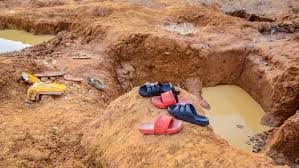
Nigeria is reeling from two mining-related tragedies this week after 37 suspected illegal miners died in the custody of the Nigeria Security and Civil Defence Corps (NSCDC) in Niger State, and a mining pit collapse in Taraba State left more than 20 people feared dead.

Niger State Governor Mohammed Umaru Bago has declared three days of mourning and suspended the flag-off of his party’s campaign rally after confirming that 37 suspects arrested in an anti-illegal-mining raid died while in NSCDC detention.
The suspects were among a group picked up during a “bust operation” carried out on September 15 and 16 at a mining site within a residential layout in the M.I. Wushishi Estate area of Minna. According to authorities, roughly 40 detainees were held in a cell built for 100 males. By the early hours of September 17, 33 of them were found dead, reportedly with foam at their mouths, while seven others were rushed to intensive care at Minna General Hospital. The state government later put the overall death toll at 37.
Officials initially pointed to a suspected outbreak of disease, with early reports from NSCDC linking the deaths to diphtheria. But the corps has since urged the public not to draw conclusions ahead of formal medical findings, and an intelligence account described to international media suggested the deaths may instead be linked to overcrowding and poor ventilation in the holding facility. Other accounts under investigation raise the possibility that some detainees had ingested drugs or chemical substances before entering the mining site.
The NSCDC’s national spokesperson, ACC Babawale Afolabi, said Commandant-General Prof. Ahmed Abubakar Audi has ordered an investigative team, led by the deputy commandant-general for Intelligence and Investigation, to examine the detainees’ condition at arrest, the length and conditions of their detention, and the medical care provided to them. The bodies have been deposited at the General Hospital, Minna, pending post-mortem examination.
A senior NSCDC officer in the state has reportedly been detained in connection with the deaths, and Niger State’s police leadership has separately ordered its own investigation. Family members have disputed suggestions that disease was to blame. Aisha Ahmed, whose brother was among the dead, said relatives simply want the bodies released so they can bury their loved ones, while maintaining that the full circumstances of the deaths must be established.
Niger State is a hub of small-scale gold mining, and unregulated extraction there has repeatedly been linked to gang violence, with much of the gold entering global supply chains through informal and, at times, trafficked channels, according to a 2024 report by SwissAid.
20 Feared Dead in Taraba Pit Collapse
In a separate incident, more than 20 people — including women and children — are feared dead after a mining pit collapsed in Mayo Kam community, in Bali Local Government Area of Taraba State. Residents said the collapse occurred while miners were working inside the pit, triggering panic in the community. Kenneth Ayila, a resident who reported the incident, said the pit “suddenly caved in” on those working inside. Community leader Mallam Usman Bello said most of the victims were indigenes of Mayo Kam, adding that residents were “in total shock.”
As of press time, the Taraba State Police Command said it had yet to receive a formal report from its Bali Area Command. Police spokesperson ASP Victor Mshelizah said headquarters was awaiting details before commenting further. The exact casualty figures and the status of rescue efforts remained unconfirmed. The collapse has renewed concern over poorly regulated mining in Taraba State, which recently hosted a roundtable summit courting international investment in its mineral resources — underscoring the gap between investment ambitions and safety oversight at existing sites.
Together, the two incidents point to a recurring pattern in Nigeria’s informal mining sector: inadequate custodial conditions for those detained in anti-mining operations, and unsafe, unregulated working conditions for those still active in illegal mining sites — both exacting a mounting human toll even as authorities pledge investigations and reform.