


Burkina Faso’s military government is facing strong condemnation from human rights organizations for its escalating crackdown on civil society. A recent mass dissolution of 118 civic groups, coupled with repressive legislation and punitive actions, is stifling independent voices and humanitarian efforts in the West African nation, according to a joint statement by Human Rights Watch, the International Federation for Human Rights (FIDH), the World Organisation Against Torture, and Observatoire KISAL.

On April 15, 2026, the Minister of Territorial Administration and Mobility announced the dissolution of 118 civil society organizations, many of which are involved in human rights work. The authorities cited a July 2025 law on freedom of association but provided only vague justifications of noncompliance. This move has been widely criticized as an attempt to silence dissent and avoid scrutiny of the government’s human rights record.
“The mass dissolution of civil society groups is the Burkina Faso junta’s latest effort to silence dissent and avoid scrutiny of its grim human rights record,” said Binta Sidibé Gascon, President of Observatoire KISAL. “The decision reinforces a climate of fear that is crippling independent civic activity.”
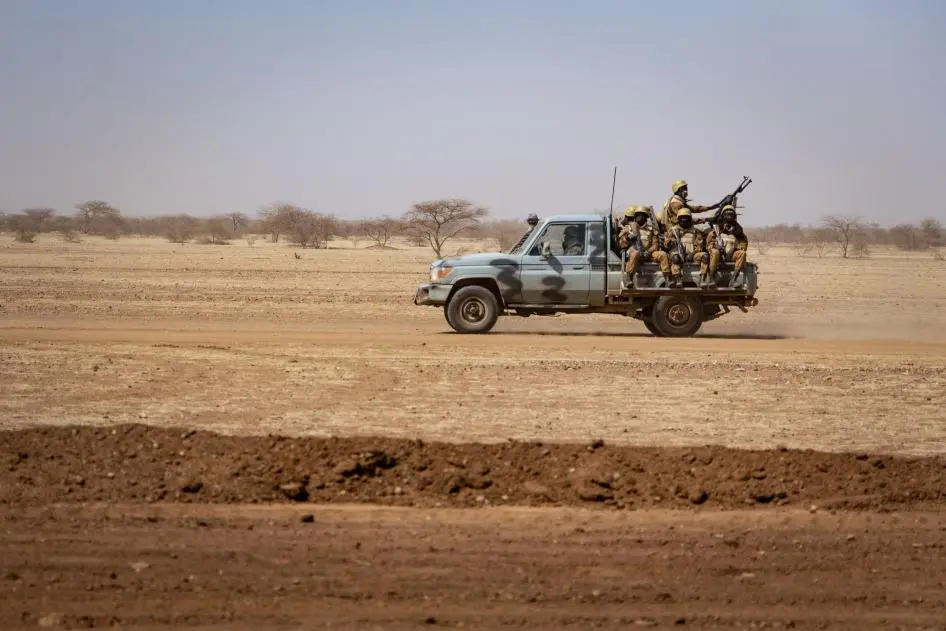
This latest action is part of a broader pattern of repression that began after the military seized power in September 2022. Since the takeover, the authorities have systematically targeted non-governmental organizations, independent media, and peaceful dissent, progressively narrowing civic space. Dozens of Burkinabè and international organizations and media outlets have been suspended, banned, or expelled on administrative or retaliatory grounds.
The repression extends to individuals, with humanitarian workers detained and human rights activists, journalists, and political opponents arbitrarily arrested, forcibly disappeared, or unlawfully conscripted into military service. This escalation occurs against the backdrop of a decade-long security crisis, as Burkina Faso battles Islamist armed groups linked to Al-Qaeda and the Islamic State.
Concerns have been raised regarding the legality of the dissolutions. While some targeted groups were inactive, others, such as Action by Christians Against Torture (ACAT) and the Burkinabè Coalition for Women’s Rights (CBDF), were operational and appeared to meet the legal requirements of the July 2025 law. Notably, the law grants organizations one year to comply, a deadline that has not yet expired.
“The military government’s action, if based on alleged noncompliance with the 2025 law, appears legally questionable since the required time frame has not yet ended,” said Ilaria Allegrozzi, senior researcher at Human Rights Watch. “The scale of the shutdown is one of the most significant blows to civil society groups since the military took power and sends a chilling message to everyone else.”
The July 2025 law, ostensibly aimed at regulating the nonprofit sector and combating money laundering and terrorism financing, has significantly expanded government control. It imposes burdensome requirements, including mandating foreign organizations to appoint Burkinabè nationals to key leadership positions, exposing them to personal risks. This risk is compounded by a September 2025 family code provision allowing the stripping of Burkinabè citizenship from those deemed to act against state interests, potentially leading to statelessness.
Earlier in April 2026, the military government threatened “firm measures” against what it termed “imperialist labs disguised as NGOs” in response to a Human Rights Watch report on war crimes. Towards the end of 2025, additional administrative barriers were introduced, such as requiring a costly and time-consuming “statistical visa” for surveys, which humanitarian workers state impedes independent data collection.
Several international aid groups, including Comunità di Sant’Egidio, Diakonia, Geneva Call, and the Tony Blair Institute, have been suspended or expelled between June and July 2025 for alleged failures to formalize agreements with the state. Since 2022, over 70 humanitarian workers have been detained, and in August 2025, the top United Nations representative, Carol Flore-Smereczniak, was expelled following a UN report on child rights violations.
Provisions of an April 2023 “general mobilization” decree, an emergency law, have been selectively used to crack down on political opposition, media, and dissent, leading to the unlawful conscription of critics, journalists, civil society activists, and judicial personnel. While some conscripted individuals, including at least six journalists and three activists, were released between July and October 2025, others, like prominent investigative journalist Serge Oulon, remain missing.
Human rights organizations emphasize that international human rights law protects freedom of expression and association, requiring any restrictions to be necessary, proportionate, and non-discriminatory. They argue that the recent dissolution of civil society groups and the 2025 law fail to meet these criteria.
“A strong and independent civil society acts as a safeguard against abuses of power and amplifying the voices of marginalized communities,” said Drissa Traoré, FIDH Secretary General. “The Burkinabè authorities should enable civil society groups to work freely and uphold the fundamental rights and liberties of everyone in Burkina Faso.”