

Today, 26 June, the United Nations marks the International Day in Support of Victims of Torture, a day designated to expose the abuse of power by governments and government officials that manifests as torture, to remember the thousands across the world who have suffered it, and to insist, unambiguously, that torture is not merely unacceptable but a crime.

The date was not chosen at random. On 26 June 1945, the United Nations Charter was signed, the first international instrument obliging member states to respect and promote human rights. On 26 June 1987, the United Nations Convention Against Torture entered into force. Two foundational commitments to human dignity, anchored to the same day.
And yet, even as the world commemorates this day, torture continues to spread as a preferred tool of interrogation. For human rights defenders, the deeper crisis is impunity: the failure of states to investigate violations fully, to bring perpetrators to justice, to provide victims with effective remedies, and to take the necessary steps to prevent recurrence.
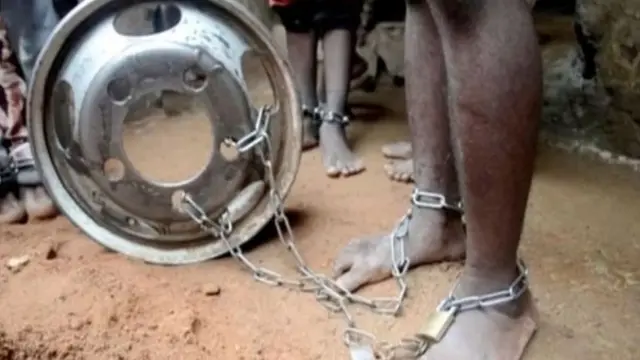
Here at home, torture has become a default method of interrogation. Police stations are increasingly functioning as slaughterhouses, limbs broken, dreams shattered, men and boys tied and hung from stakes, electrocuted or subjected to mock execution, women and girls violated. How much worse can it get?
There is no denying that Nigeria’s rising crime wave, the brutality of criminal networks, and the terrorism gripping the north supply ready justification for those who defend torture as a method of interrogation. They are not alone in this. Even internationally, consensus on the total abolition of torture is not universal, and there is always a utilitarian case waiting to be made for legal exceptions. The “ticking time bomb” scenario is the favored argument: that the urgent need for information outweighs the ethical case against torture. Faced with a terrorist threat, Boko Haram, ISIS, Bandits etc, the reasoning goes that a measure of torture is justified for the “greater purpose” of saving innocent lives.
By this logic, in an age of terrorism, a limited tolerance for torture becomes expedient. Torture, its defenders argue, is relatively humane set against what terrorists do to their captives, schoolgirls among them, and the intelligence extracted under duress is said to justify the method.
This argument is too simplistic, and history disproves it. The use of torture by successive regimes has repeatedly created a far bigger problem than the one it claimed to solve. As Gilles Kepel observed in The War for Muslim Minds, the interrogation, torture and socialization of prison turned many of the men rounded up under Mubarak into hardened militants, men who became, in his account, the foot soldiers of terrorism.
Human rights advocates and the United Nations are unequivocal: torture must be banned because it is both immoral and impractical. It is unpleasant, horrific, and a clear violation of human rights. No human being should ever possess the right to degrade another, for any cause. For the United Nations, torture cannot be justified under any circumstance, including armed conflict or a declared state of emergency. The Convention Against Torture, to which Nigeria is a signatory, expressly bans the torture of all persons, civilians, criminals, combatants, prisoners of war and terrorists alike. It is unambiguous international law, foreclosing even the “exceptional” ticking-time-bomb scenario. The Rome Statute of the International Criminal Court goes further, classifying torture as a crime against humanity, one for which a suspect can be tried at The Hague.
The Nigerian Human Rights Observatory has over the years have observed the development with interest. We have seen young men and women reduced to a vegetative state by what they endured in police stations. We have seen young men crippled, permanently deformed, by officers acting in the name of interrogation. And We have seen, too, the psychological toll on the interrogators themselves, the so-called “OC Torture,” the officers tasked with the duty of inflicting it. It is no small thing to remain psychologically sound while carrying out such acts, day after day.
We have come, through all of this, to align myself with Lord Hoffmann, who argued that the use of torture is dishonourable: “It corrupts and degrades the state which uses it and the legal system which accepts it.” I share, too, the view of Mordecai Kremnitzer, who held that when the state itself beats and extorts, it can no longer claim to rest on the foundations of morality and justice, only on force.
The Nigerian Constitution forbids torture and any form of inhuman or degrading treatment, but it stops short of making torture a criminal offence. The anti-torture act 2017 was signed by Former President Buhari in December 2017. Since then, no security official has been tried and convicted for torture despite it widespread . The reason is not hard to find: the implementation of the law not a priority because its victims are never the children of politicians or business executives. They are the poor, the residents of ghettos, the so-called common criminals. Torture’s victims are not arrested on the cosy pavements of Ikoyi or Maitama, they are rounded up in bars and on the streets of Nigeria’s poorest neighbourhoods.
Until that changes, until the law protects the man in the cell as deeply as it protects the man in Ikoyi, Nigeria’s commemoration of this day will remain an act of mourning, not of justice.