

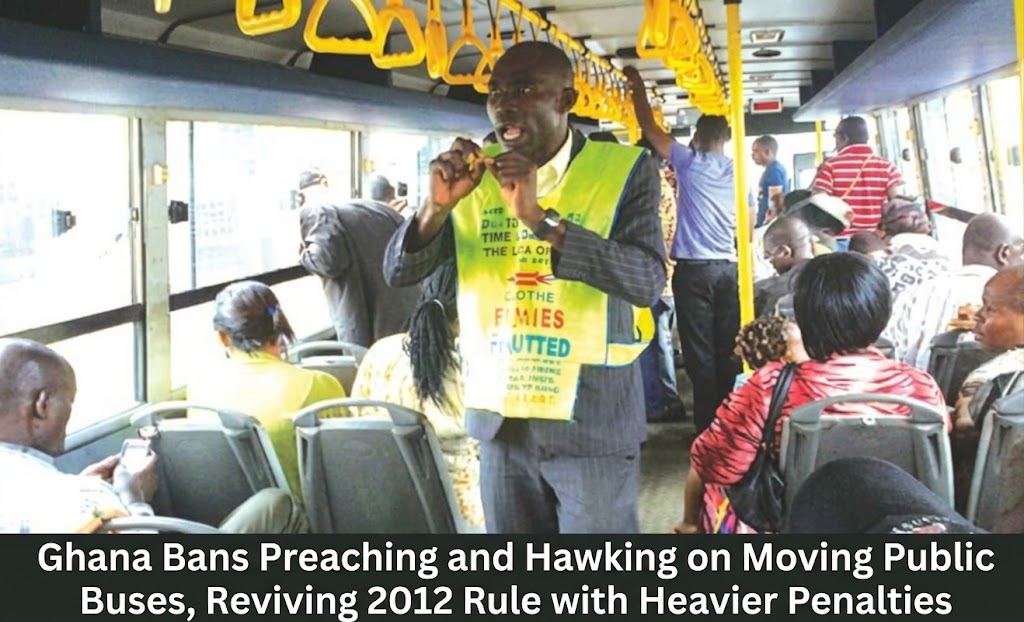
Ghana has begun enforcing a ban on preaching and hawking inside moving public and commercial vehicles, imposing tougher penalties on a restriction that has long gone unenforced. Under the Road Traffic Regulations, 2026, passed by parliament in May, offenders face a fine of 10 to 50 penalty units, which is up to GH¢600 (about $52), up to eight months in prison, or both. The regulations classify both activities as a nuisance and say the aim is to protect passenger safety and comfort and stop drivers from being distracted. They also cover overcharging and stopping outside designated areas.

A similar ban has existed since 2012, with a maximum of 30 days in prison, but weak enforcement let the practice continue. Enforcement began in recent weeks, alongside a nationwide awareness campaign by the Transport Ministry. Transport Minister Joseph Bukari Nikpe said authorities want everyone in the transport sector to understand how the law will be operationalised. The rule applies to all faiths and does not restrict preaching in general, only while a vehicle is in motion. Preachers using megaphones at lorry parks and markets are unaffected.
In a country where about seven in ten people are Christian, according to the 2021 census, bus sermons are a familiar sight. Pastors preach from the stairwell or walk the aisle, sometimes for hours, and passengers often give them money.
Boateng Bismark James, 61, a pastor at Gospel Light church who has preached on buses leaving Accra’s Neoplan station since 2023, said he was shaken by the law. He said many pastors depend on passengers’ gifts, and that about half of the support for his youngest child’s university education came from preaching. He wants an exemption allowing preachers to speak until the bus leaves Accra. Opinion is divided. Chery Lokko, a passenger in her early 30s, called preachers a nuisance who disturb her peace. Bernice Nartey, travelling to Kumasi, said preaching can give hope but should require passengers’ consent.
Ghana’s constitution guarantees religious freedom, subject to public safety and others’ rights. Rev Enoch Paul Hayes of the International Central Gospel Church said he does not believe the law infringes religious freedom. He urged pastors to obey it and use social media instead. The Christian Council of Ghana did not respond to the BBC’s request for comment. Nigeria’s parliament has reportedly considered a similar restriction on safety grounds.