

A Nigerian activist is behind bars after criticising a state official online. Fifty civil society groups say the charges are politically motivated — and part of a broader campaign to crush dissent.

By Staff Reporter | Enugu ·
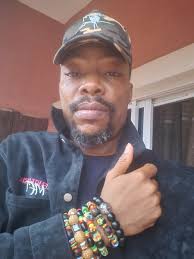
Chijinkem Ugwuanyi did what millions of Nigerians do every day: he opened Facebook and posted his opinion about a government official. For that, he is now sitting in Enugu Prison.
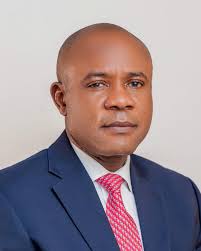
On January 27, 2026, a magistrate in Enugu State arraigned the social media influencer and civil rights activist on charges of defamatory publication and cyberbullying — stemming from a post about Prof. Chidiebere Onyia, Secretary to the Enugu State Government. The magistrate refused bail and remanded Ugwuanyi in custody, where he remains today.
Now, a coalition of fifty civil society organisations has issued a joint statement demanding his immediate release, describing the prosecution as “a coordinated effort” to silence a prominent government critic — and warning of a pattern of escalating intimidation that began with a violent street attack just weeks before the arrest.
“No individual should face punishment for criticising a government official. Freedom of expression is protected under international human rights law.”
— Amnesty International, cited by the coalition
An Attack in Broad Daylight
The backstory to the arrest is, if anything, more alarming than the charges themselves. On December 13, 2025, Ugwuanyi was leaving a meeting in Nsukka when six men attacked him at a fuel station. One of the assailants, he says, was “Egbugo” , identified as the Chief Security Officer of Nsukka Local Government Area , who reportedly accused him of criticising the Nsukka LGA Chairman.
Ugwuanyi reported the assault to the police. Nothing happened. No arrests were made. No perpetrators were questioned. Six weeks later, he was the one in handcuffs.
“The failure of law enforcement to respond to this complaint raises serious questions about whether the police have been complicit in, or deliberately indifferent to, the persecution of this individual,” the coalition statement reads. “The escalation from physical assault to criminal charges strongly suggests a deliberate and orchestrated effort by powerful actors to neutralise a vocal critic.”
A Law Being Stretched Beyond Its Intent
The coalition’s legal experts argue that the charges against Ugwuanyi have no basis in the law used to bring them. Section 24 of Nigeria’s Cybercrimes Act 2015, they note, covers the transmission of pornographic content or messages that are knowingly false and intended to incite a breakdown of law and order or threaten life. Commenting on a public official, they say, does not come close to that threshold.
It is not the first time the law has been deployed in this way. Journalists, bloggers, and ordinary citizens across Nigeria have faced prosecution under the Cybercrimes Act for social media posts critical of authorities — a pattern that human rights groups say has accelerated in recent years.
“Cybercrime and defamation statutes are being weaponised against journalists, activists, and ordinary citizens for exercising their constitutionally protected rights,” the coalition warns. “The Nigeria Police Force must not become a tool in the hands of politicians.”
Fifty Groups Speak with One Voice
The statement was signed by fifty organisations spanning human rights law, civil liberties, press freedom, women’s rights, disability rights, environmental advocacy, and prison reform — from Amnesty International Nigeria and the Civil Liberties Organisation to local coalitions in Akwa Ibom, Bauchi, Edo, and Enugu states.
Their demands are unambiguous: release Ugwuanyi unconditionally; drop all charges; investigate the December assault; stop weaponising the Cybercrimes Act; and hold accountable any officials who abused state power.The coalition’s closing words carry the weight of the movement behind them: “Freedom of expression is not a privilege, it is a right.”
A Warning Sign for Press Freedom
Ugwuanyi’s case arrives at a moment of heightened concern about civic space in Nigeria. Media watchdogs have documented a rise in prosecutions of online commentators, with state and local governments increasingly using criminal complaints — rather than civil defamation suits — to silence critics and drain them financially through prolonged legal proceedings.
For now, Ugwuanyi remains in Enugu Prison. His supporters are watching to see whether the weight of fifty organisations, and the glare of public attention, is enough to secure what a court has so far refused him: his freedom.