

Nigeria recorded the steepest rise in terrorism-related deaths of any country in 2025, with fatalities climbing 46 per cent to 750, even as global terrorism deaths fell sharply, according to the 2025 Global Terrorism Index (GTI) released by the Institute for Economics and Peace (IEP).

The 2025 GTI, published annually by the Sydney-based Institute for Economics and Peace, tracks terrorism trends across more than 160 countries. This year’s edition found that despite a significant decline in terrorism-related deaths and attacks worldwide, sub-Saharan Africa remains the epicentre of global terrorism, accounting for the highest concentration of fatalities. Globally, terrorism deaths dropped 28 per cent in 2025 to 5,582, while attacks fell by nearly 22 per cent to 2,944 incidents — the lowest figures in several years.
Eighty-one countries registered improved outcomes, and only 19 experienced deterioration — the smallest number since the index began. Despite these gains, the report cautioned that progress may be short-lived. Emerging global conflicts, the resurgence of geopolitical rivalries, and deepening instability in parts of Africa and Asia could yet reverse hard-won improvements. Seven of the 19 countries that worsened were in the West, reflecting a worrying uptick in domestic radicalisation and lone-actor attacks.
The GTI has been published by the Institute for Economics and Peace (IEP) since 2012. It draws on data from the Global Terrorism Database, maintained by the National Consortium for the Study of Terrorism and Responses to Terrorism (START) at the University of Maryland. Over the past decade, the index has charted a dramatic geographical shift in terrorism — from the Middle East to sub-Saharan Africa — with Nigeria sitting at the heart of that transformation.
Despite the global decline, terrorism remains heavily concentrated. Just under 70 per cent of all terrorism-related deaths occurred in five countries: Pakistan, Burkina Faso, Nigeria, Niger, and the Democratic Republic of the Congo (DRC). Six of the 10 most impacted countries are in sub-Saharan Africa.
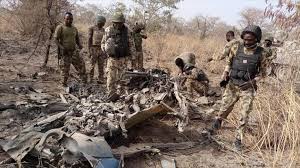
Nigeria’s crisis is rooted in over a decade of insurgency. Boko Haram, founded in Maiduguri, launched its violent campaign in 2009, killing thousands and displacing millions across the Lake Chad Basin. The group later fractured, with the Islamic State West Africa Province (ISWAP) splitting off in 2016. Today both groups continue operating in the northeast, with ISWAP increasingly capable of large-scale ambushes on military convoys and attacks on civilian communities.
Together, ISWAP and Boko Haram accounted for approximately 80 per cent of Nigeria’s terrorism deaths in 2025. Their tactics have evolved from suicide bombings and kidnappings to sustained guerrilla warfare, targeted assassinations of local officials, and the systematic destruction of schools and health facilities. The United Nations has described the humanitarian situation in Nigeria’s northeast as one of the worst in the world, with over two million people internally displaced.
The report identified Islamic State (IS) and its affiliates as the deadliest terrorist network in 2025, even though its geographical reach shrank from 22 countries to 15.
Alongside IS, other major groups driving global terrorism include Jamaat Nusrat Al-Islam wal Muslimeen (JNIM), Tehrik-e-Taliban Pakistan (TTP), and al-Shabaab. Collectively, these four organisations were responsible for 3,869 deaths, accounting for approximately 70 per cent of all terrorism fatalities worldwide. While three of the four groups recorded a decline in the number of deaths attributed to them, Tehrik-e-Taliban Pakistan (TTP) was the only group that saw an increase.
Among the hardest hit, Nigeria recorded the largest rise in terrorism-related deaths globally in 2025, with fatalities increasing by 46 per cent to 750. The GTI attributed about 80 per cent of those deaths to ISWAP and Boko Haram — a figure that underscores the persistent and worsening threat posed by both groups despite years of military operations by Nigerian security forces and the Multinational Joint Task Force (MNJTF), a regional coalition comprising troops from Nigeria, Niger, Chad, Cameroon, and Benin.
Similarly, the Democratic Republic of the Congo witnessed a sharp increase in terrorist violence, recording its worst-ever ranking on the index. Deaths rose by nearly 28 per cent to 467, largely driven by attacks from the IS-affiliated Allied Democratic Forces (ADF), which frequently targeted civilians, churches, hospitals, and even funerals. Across sub-Saharan Africa, the report noted mixed trends. While terrorism-related deaths declined in ten countries, four countries experienced increases.
The Sahel region, in particular, remained the hardest hit, accounting for more than half of all terrorism deaths globally. Interestingly, five countries in the Sahel recorded reductions in both the number of attacks and fatalities, with Nigeria emerging as the only country in the region to record increases in both categories. Burkina Faso, which ranked as the most terrorism-affected country in 2023 and 2024, recorded the most significant global improvement in 2025.
Terrorism-related deaths in the country dropped by 686, representing a 45 per cent decrease. However, the report cautioned that the reduction was accompanied by increased lethality, indicating that while attacks were fewer, they were more deadly. The decline in Burkina Faso was largely driven by a sharp drop in civilian casualties, which fell by 84 per cent. Nevertheless, fatalities among security forces rose significantly, pointing to intensified clashes between militants and government troops.
Globally, the year 2025 was marked by the absence of large-scale, mass-casualty attacks. The deadliest incident recorded 120 deaths, a notable reduction compared to 237 deaths in 2024 and over 1,100 deaths in 2023. It was also the only attack during the year that resulted in more than 100 fatalities, compared to five such incidents the previous year. The report noted that average lethality per attack also declined from 2.1 deaths per incident in 2024 to 1.8 in 2025.
The report further highlighted a shift in the operational focus of Islamic State. While attacks in the Middle East and North Africa dropped by 39 per cent, incidents in sub-Saharan Africa nearly doubled, rising from 111 to 221 attacks. This shift underscores the group’s growing influence in the region. Over the past decade, the report noted a significant geographical shift in terrorism trends.
While the Middle East and North Africa have seen a 95 per cent decline in terrorism-related deaths, sub-Saharan Africa has experienced a steady rise, with the Sahel emerging as the new global hotspot. The Sahel alone accounted for more than half of all terrorism-related deaths in 2025, a dramatic increase from less than one per cent in 2007, according to the report.
Despite the global reduction in terrorism, the report emphasised that sub-Saharan Africa, alongside South Asia and the Middle East and North Africa, accounted for nearly 94 per cent of all terrorism deaths worldwide in 2025.