

There is something unsettling about the calendar. Turn to almost any week of the year in Nigeria’s modern history, and you will find it marked — by a courtroom decision, a burial, a bomb, or a crackdown. The week of July 12 to 18 is no exception. Across five decades, it has carried the weight of civil war, military repression, insurgent violence, and the slow, uneven march toward accountability. Read together, these dates form less a list than a pattern: rights won in one year, rolled back in another, and defended again by the people who refused to let them go.

1966: The Quiet Before the Coup
Officially, the “Northern Counter-Coup” — Operation Aure — did not erupt until July 29, 1966. But the mid-July window that preceded it was not calm. In the wake of Major General Johnson Aguiyi-Ironsi’s Unification Decree No. 34, which had abolished Nigeria’s federal structure earlier that year, ethno-political tension was already boiling over in northern barracks and towns. Minor mutinies, localized killings, and aggressive anti-Igbo profiling spread through the weeks before the counter-coup, laying the groundwork for the massacres — and the civil war — that followed. History textbooks tend to date the rupture to late July. The truth is that the fuse was already lit two weeks earlier.
1968: The Hospital That Was Not Spared
By July 12, 1968, the civil war was in full, brutal swing, and its violence had stopped respecting the line between combatant and civilian. Nigerian Air Force raids struck the Aba General Hospital and the civilian infrastructure around it, killing patients and medical workers alike. The attack became a reference point in international debate over the laws of war, and it helped galvanize a young organization that would go on to define humanitarian response for the next half-century: Médecins Sans Frontières, founded in the shadow of Biafra, protested the bombing and the broader weaponization of blockades against civilian populations.
1993: Ken Saro-Wiwa and the Ogoni Nine
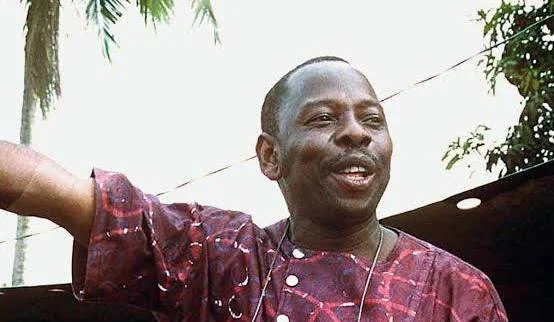
A quarter-century later, the same week became a hinge point for the Ogoni struggle. On July 13, 1993, Ken Saro-Wiwa and fellow members of the Movement for the Survival of the Ogoni People were formally charged on six counts tied to their activism — unlawful assembly, seditious intention, seditious publication. Amnesty International designated the detained activists prisoners of conscience. Saro-Wiwa, who had a serious heart condition, lost consciousness twice in detention on July 16. A Port Harcourt High Court ordered his transfer to hospital the following day. The authorities did not comply. The case would become one of the defining human rights scandals of the decade, ending in Saro-Wiwa’s execution two years later — but its roots trace directly to this week.
1994: Gunfire in Lagos and Ibadan
On July 18, 1994, police opened fire on pro-democracy demonstrations in Lagos and Ibadan, killing at least twenty protesters. The anger on the streets was twofold — political frustration with military rule, and fuel shortages caused by an ongoing oil workers’ strike. Demonstrators lit bonfires and threw rocks; police answered with bullets and tear gas, while the Nigerian Labour Congress called a general strike that paralyzed Lagos. By the time the broader June–August crackdown ended, AFP estimated the death toll from police action at roughly 100.
1995: Abacha’s Secret Tribunals
The mid-1990s brought a different, quieter form of violence — the kind carried out in closed courtrooms. In mid-July 1995, General Sani Abacha’s government moved systematically against pro-democracy activists, journalists, and political rivals, framing the crackdown as a response to an alleged coup plot. During this exact week, human rights defender Dr. Beko Ransome-Kuti was arrested, and secret military tribunals sentenced figures including Shehu Sani and former Head of State Olusegun Obasanjo. Denied independent counsel and tried behind closed doors, the defendants received sentences later commuted under international pressure — but the episode cemented Nigeria’s pariah status in global diplomacy for the remainder of the decade.
1998: A Death in Custody, and Its Aftermath
Chief M.K.O. Abiola, winner of the annulled 1993 presidential election, died in military custody on July 7, 1998. The following week, Nigeria teetered on the edge of collapse. Civil unrest spread through Lagos and the southwest; security forces responded with extrajudicial killings of dozens of demonstrators. In Ondo State on July 18, an SIIB officer’s attempt to extort a bribe ended with a taxi driver shot dead — and the community’s response was ferocious: a crowd killed several security officers, stormed a police station and the local prison, freed roughly 130 inmates, and burned the facility down. At least fourteen people died and thirty were arrested. Yet the same volatile week also produced a pivot toward de-escalation: General Abdusalami Abubakar’s new administration accelerated the release of political prisoners jailed under Abacha, easing tensions and opening the path to civilian rule the following May.
1999–2002: Building the Legal Guardrails
Not every entry in this week’s history is a story of violence. On July 13, 1999, Nigeria’s newly elected National Assembly opened its legislative session with constitutional reform as a stated priority — a moment Human Rights Watch flagged as significant given the well-documented flaws in the 1998–99 transition elections that had installed it. Three years later, in mid-July 2002, judicial and civil rights groups secured a series of legal victories interpreting Nigeria’s adoption of the African Charter on Human and Peoples’ Rights: any executive detention without immediate judicial oversight, they established, violated Chapter IV of the Constitution — a direct rebuke to the legacy of Decree No. 2, the instrument the military had used for decades to jail citizens indefinitely without trial.
2000s: Oil, Insurgency, and Uneasy Diplomacy
The Niger Delta’s long-running resource conflict left its own marks on this week. On July 16, 2000, a pipeline explosion between Ifie-Kporo and Ijala villages in Delta State killed more than 100 people, one of many mass-casualty incidents tied to poverty and neglected infrastructure. Militant attacks recurred in the years that followed: explosions struck Agip oil installations in Bayelsa on July 12, 2006, and gunmen in speedboats attacked a navy vessel guarding oil facilities in Rivers State in 2008.
Diplomacy also had its moment. On July 12, 2003, U.S. President George W. Bush met President Olusegun Obasanjo in Abuja to finalize asylum terms for Liberian warlord Charles Taylor — a deal meant to end the Second Liberian Civil War but one that provoked fury from rights groups, who argued Nigeria was harboring an indicted war criminal without trial. Taylor was eventually arrested in Nigeria in 2006 and extradited to face justice. And on the health front, the Federal Government signed an agreement with the Clinton Foundation’s AIDS initiative on July 17, 2006, expanding access to cheaper antiretroviral treatment for a country then home to roughly three million people living with HIV.
2011–2016: The Insurgency Years
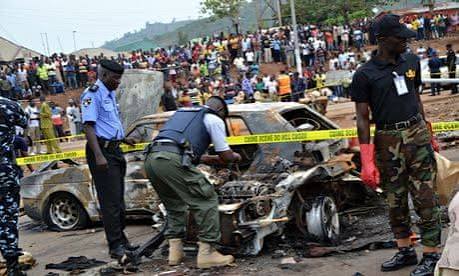
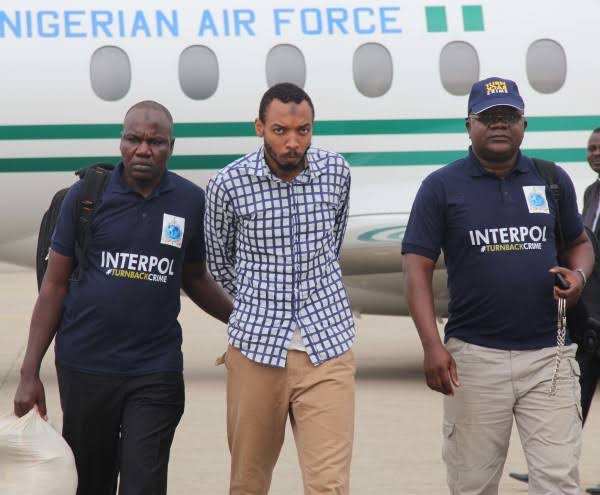
The rise of Boko Haram gave this week a grimmer, more recent chapter. A bomb attack on a police patrol in Maiduguri on July 15, 2011, wounded seven civilians and eight officers — one early tremor of an insurgency that would come to define the decade’s most severe human rights crisis. By July 16, 2014, the group’s mastermind, Aminu Sadiq Ogwuche, was extradited from Sudan to face trial over the Nyanya bus terminal bombing that had killed more than 75 people that April. The same week, Boko Haram opened new fronts — explosions in Lagos, a kidnapped foreign aid worker in Adamawa — forcing a military response that would itself strain civil liberties across the northeast for years. A measure of that strain eased in 2012, when the Federal Government lifted the state of emergency imposed on four northern states in response to the insurgency.
A Death Sentence Undone
Not every story from this week ends in loss. On July 13, 2012, Olatunji Olaide walked out of Kirikiri Prison in Lagos after twenty-three years on death row for a car robbery conviction — a sentence the Court of Appeal had overturned weeks earlier, declaring him innocent. Amnesty International cited the case as emblematic of its broader concerns about wrongful convictions and Nigeria’s death row population, which then exceeded a thousand people.
Why This Week Matters
Taken individually, these dates might read as historical trivia — a scattering of anniversaries with little to connect them. Taken together, they trace the arc of a country still negotiating the terms of its own accountability: courts asserting themselves against executive overreach, communities meeting violence with violence, and organizations — from MOSOP to Amnesty International to the fledgling Médecins Sans Frontières — insisting that some lines cannot be crossed without consequence. This week in history is not simply about what happened. It is about what Nigerians decided to do about it, and what remains undone.