


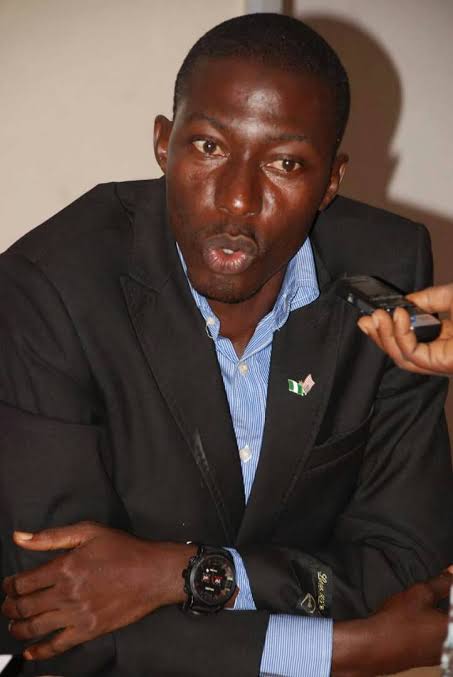
A coalition of more than 50 civil society and human rights organisations is demanding the immediate and unconditional release of Niger Delta human rights defender Daniel Ezekiel, who they say was picked up by unidentified men and is now being held without any publicly disclosed charge.

According to a statement issued Monday, Ezekiel was taken from his home in Life Camp, Abuja, on Friday, September 18, by men who did not identify themselves. He was initially held at the Agwa Cement Police Station and is now in custody at the Force Criminal Investigation Department in Abuja. The coalition says it remains unclear under whose authority the arrest was carried out.
The detention comes roughly two weeks after lawyers for businessman Chief Ekomieyefa Uduboh filed a petition, dated September 3, with the Inspector-General of Police and the National Cybercrime Centre. The petition accuses Ezekiel and another individual of publishing defamatory Facebook posts in late August — allegations the coalition stresses remain untested, noting that Ezekiel is entitled to a presumption of innocence.
Ezekiel has for months publicly accused Chief Government Ekpemupolo, widely known as Tompolo, and men linked to him and to Tantita Security Services Nigeria Limited, of running private detention facilities in the Niger Delta where torture, forced labour, extrajudicial killings and enforced disappearances allegedly take place. He has submitted petitions on the matter to national and international human rights bodies, security agencies and government offices, backing his claims with photographs, audio and video recordings, and testimony from alleged victims and their families.
“When a whistleblower is detained before the allegations he raised are examined, the public is left to ask whose interests the system is protecting,” said Juwon Sanwolu, coordinator of the Take It Back Movement, speaking on behalf of the coalition.
The coalition argues the arrest raises serious constitutional concerns. It cites Section 35 of the 1999 Constitution, the African Charter on Human and Peoples’ Rights, and the International Covenant on Civil and Political Rights, all of which protect against arbitrary arrest — noting that a warrantless arrest by unidentified individuals, followed by an unexplained transfer between police facilities, raises questions about the legality of the process.
The statement also warns against the use of cybercrime laws to pursue what it characterises as an ordinarily civil defamation matter, arguing this threatens free expression rights guaranteed under Section 39 of the Constitution and Article 19 of the ICCPR. It notes that the ECOWAS Court of Justice has previously ruled Nigeria’s cyberstalking provision to be in violation of that freedom. “If the police can be used to settle private scores with human rights defenders, no citizen who exposes wrongdoing is safe,” the coalition said.
Among its demands, the coalition is calling on the Nigeria Police Force to release Ezekiel immediately, on the Inspector-General of Police to publicly disclose the legal basis for the arrest and the identities of officers involved, and on the Attorney-General of the Federation and the National Human Rights Commission to launch an independent investigation into Ezekiel’s torture and forced-labour allegations, with protections for witnesses.
The coalition said it would monitor developments and was prepared to escalate the matter to United Nations and African regional human rights mechanisms if Ezekiel is not released and his allegations remain uninvestigated.
Signatories include the Take It Back Movement, Amnesty International Nigeria, the Civil Liberties Organisation, the Social Justice Advocacy Initiative, the Centre for Democracy and Development, and dozens of other rights and civic organisations across Nigeria.