


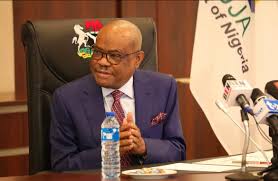
The power struggle between FCT Minister Nyesom Wike and the Federal Capital Territory Administration (FCTA) workforce reached a fever pitch yesterday, as striking workers defied a direct court order and looming threats of dismissal to prolong their industrial action.

What began on Monday as an indefinite strike organized by the Joint Unions Action Committee (JUAC) has evolved into a total paralysis of the capital’s administrative machinery. From the bustling halls of the FCT Secretariat to the quiet classrooms of primary schools across the six area councils, activities have ground to a halt. Critical agencies, including the Abuja Geographic Information Systems (AGIS) and the Water Board, remain padlocked, leaving residents stranded and public services in limbo.
A Legal Blow and a Defiant Response
Seeking to break the deadlock, Minister Wike approached the National Industrial Court, arguing that JUAC is not a registered trade union and that the strike violates the Trade Disputes Act. Justice Emmanuel Subilim sided with the administration, ordering the workers to suspend the strike immediately to prevent the total collapse of government business. While acknowledging the right to protest, the Justice maintained that such rights are not absolute.
The ruling, however, appeared to fuel the fire rather than extinguish it. “They have the guns, they have the resources, but the people’s power is greater than theirs,” declared Felicia Okoro, Chairperson of the FCDA Chapel, as she rallied colleagues to remain home. Union officials confirmed they intend to appeal the judgment today, insisting their demands—which include the payment of five-month wage awards and, notably, the removal of Wike himself—must be met.
Wike Strikes Back
Unmoved by the defiance, a hardline Wike addressed the media with an ultimatum: resume or face the consequences. Attempting to seize the narrative, the Minister disclosed that over N12 billion had been approved for January salaries and highlighted a surge in Internally Generated Revenue to over N30 billion.
“Workers are largely responsible for the lack of development in states, including the FCT,” Wike remarked, dismissing the strike as a politically motivated distraction. He also took the opportunity to dispel social media rumors that he had been chased from his office, clarifying he was merely escorting President Bola Tinubu to the airport. In tandem with Wike’s warnings, the acting Head of Service, Nancy Sabanti Nathan, has directed permanent secretaries to open attendance registers to identify and sanction those who fail to report for duty.
The NLC Joins the Fray
The conflict has now caught the attention of the national leadership of the Nigeria Labour Congress (NLC). In a scathing statement, NLC Acting General Secretary Benson Upah accused the court of ignoring the “injustice” meted out to workers, specifically the non-remittance of National Housing Fund (NHF) and pension deductions.
Upah lambasted Wike for issuing threats before the “ink on the court order was dry,” suggesting the court’s decision was an attempt to weaken the resolve of “injured workers.” The NLC has put all institutions on notice, warning of a “serious engagement” over statutory violations.
Behind the Scenes: Welfare or Power Play?
While the union points to 14 grievances centered on welfare, whispers within the Secretariat suggest a deeper rift. Sources indicate that several high-ranking directors are disgruntled with Wike’s aggressive leadership style, claiming they have been stripped of statutory allocations and “imprests” that traditionally greased the wheels of the bureaucracy.
Whether this is a genuine fight for workers’ rights or a proxy war fueled by political adversaries, the result remains the same: a capital city in a state of administrative siege with no clear end in sight.