


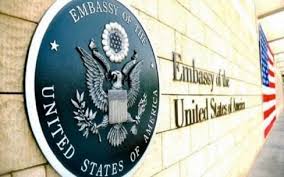
The United States has taken a significant step back from its diplomatic footprint in Nigeria, authorizing non-emergency embassy staff and their families to leave the country following what it describes as a worsening security environment.

The move, which took effect April 8, 2026, was accompanied by an updated travel advisory that now urges American citizens to reconsider any planned travel to Nigeria. The State Department cited a combination of violent crime, terrorism, kidnapping, and civil unrest as key drivers of the decision, while also flagging the country’s unreliable healthcare infrastructure as an additional concern.
Nigeria’s overall travel classification was maintained at “Level 3: Reconsider Travel,” but the department expanded its most severe warning category, adding five more states — Plateau, Jigawa, Kwara, Niger, and Taraba — to its “Level 4: Do Not Travel” list. That brings the total number of states under the harshest warning to 23.
The advisory paints a grim picture across all regions of the country. In the North, states including Borno, Yobe, and northern Adamawa are flagged for terrorism and kidnapping, while Bauchi, Kano, Sokoto, Zamfara, and several others are highlighted for widespread banditry and communal violence. The State Department warned that security operations in these areas can occur without notice, and that instability in those states remains fluid and unpredictable.
In the South and Southeast, the picture is not much better. States including Rivers (outside Port Harcourt), Imo, Delta, Enugu, Abia, Anambra, and Bayelsa are identified as hotspots for kidnapping, violent protests, and organized armed gangs. “Crime is widespread in Southern Nigeria,” the advisory stated bluntly.
The advisory singled out American citizens as frequent targets, noting they are widely perceived as wealthy. Violent crimes including armed robbery, carjacking, and kidnapping for ransom are described as commonplace throughout the country. Terrorist threats extend beyond conflict zones, with markets, hotels, shopping centers, places of worship, and public gatherings all identified as potential targets.
Despite the stark warnings, the State Department stopped short of a blanket ban on travel to Nigeria. For those who choose to go, authorities urged enrollment in the Smart Traveler Enrollment Program, avoidance of protests and large crowds, and the establishment of personal safety plans — including what the advisory called “proof of life” protocols for emergency situations.
The decision to authorize the departure of embassy personnel’s families marks one of the more visible signals yet of Washington’s deepening anxiety over security conditions in Africa’s most populous nation.