


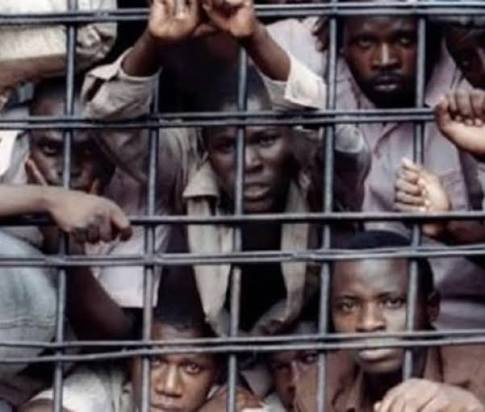
The world’s prison population is climbing once again, reaching 11.7 million people in 2023 after a brief pandemic-era dip, according to the second edition of “Prison Matters,” a global report released Friday by the United Nations Office on Drugs and Crime (UNODC). The report, timed to coincide with Nelson Mandela International Day on 18 July, paints a troubling picture of overcrowded, under-resourced prison systems worldwide, even as it points to growing momentum for reform.

Overcrowding widespread
More than 60 percent of the 181 countries with available data are operating prisons beyond full capacity, the report found. More than one in four countries runs a prison system at over 150 percent capacity — a level of congestion that UNODC says compromises nutrition, hygiene, healthcare, and the physical and mental wellbeing of detainees.
Beyond the strain on physical space, the report notes that overcrowding fuels violence, erodes prison infrastructure, and creates serious security and management challenges. Any credible push toward rehabilitation-focused prisons, the report argues, must begin with tackling overcrowding head-on.
The report also flags the widespread use of pre-trial detention as a major driver of overcrowding. Globally, more than 3.7 million people — roughly 30 percent of the prison population — are being held before trial. Africa and Oceania have the highest rates of unsentenced detainees, at 37 percent each, while Europe has the lowest, at 19 percent.
The situation is most acute in Southern Asia, where 64 percent of detainees are held without sentencing — up from 54 percent a decade earlier. The report also notes that in Africa and Oceania, women are disproportionately represented among pre-trial detainees, exceeding the share of men by more than seven percentage points.
UNODC stresses that pre-trial detention should be reserved for cases involving genuine risk of flight, reoffending, or interference with justice, warning that its overuse undermines both the principle of proportionality and detainees’ right to a fair trial.
The report draws particular attention to deaths in detention, noting that more than one in ten prison deaths are recorded as suicides. In 2023, the prison suicide rate stood at 32.9 per 100,000 — more than three times the general population rate of 9.1 per 100,000 recorded in 2021.
Homicide rates among prisoners also exceed those in the general population in almost every country with available data. The Americas recorded the highest prison homicide rate, at 17.4 per 100,000, compared to 2.0 per 100,000 in Europe — a disparity UNODC links in part to organized crime rivalries and unsafe custodial conditions.The report describes most custodial deaths as preventable, reflecting gaps in states’ duty of care toward people in their custody.
The report argues that meaningful rehabilitation depends not only on programming but on the character of the prison environment itself — one built on respect, humane treatment, and consistent institutional support. It calls for embedding a rehabilitative ethos into prison design, management, and staff culture, paired with government policies that ease reintegration, including the removal of barriers to post-prison employment and efforts to reduce the stigma of incarceration.
This year’s report carries added symbolic weight, marking the 10th anniversary of the Nelson Mandela Rules and the 15th anniversary of the Bangkok Rules on the treatment of women prisoners. UNODC says it is currently working with more than 50 member states on prison and penal reform initiatives aimed at shifting correctional systems away from punishment and toward justice and rehabilitation.