

When the Violence Runs Both Ways: August 9-15 in Nigeria’s Human Rights History

From rigged 1983 polls that set the stage for a coup, to a date that keeps recurring across three unrelated decades, a rare diplomatic win, a military’s public denial, and the tail end of a deadly protest crackdown; the second week of August is where Nigeria’s state violence, its opponents’ violence, and its occasional moments of restraint have all collided
Most weeks in this recurring history have a single, clear direction: the state, or forces aligned with it, using force against citizens. The second week of August complicates that picture more than most. Across five decades, this week has hosted rigged elections and the violence they triggered, underground bombings, an armed sect targeting a cleric, a foreign-policy triumph on arms control, a border quietly redrawn, a military publicly refusing the call to seize power, and a government crackdown on peaceful dissent that repeated, almost exactly, three decades after the last one.
1983: Ballots and Bonfires
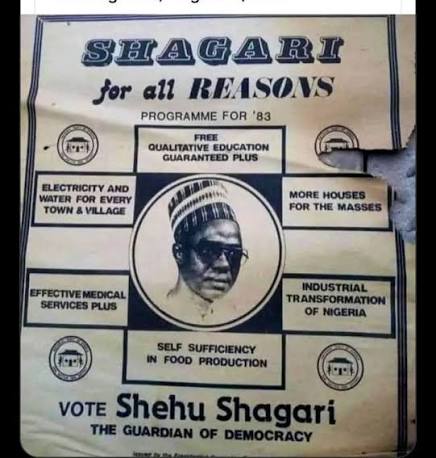
On August 13, 1983, Nigeria held gubernatorial elections that the ruling National Party of Nigeria won across most of the country through what independent observers and even some of the NPN’s own regional rivals described as blatant rigging, coming just a week after a similarly contested presidential vote returned President Shehu Shagari to office. The anger detonated first in Oyo State, where mobs burned the homes of suspected ballot manipulators, and then, days later, in Ondo State, where a disputed governorship result triggered riots that killed dozens, including two candidates who were burned alive. The chaos of that August, layered onto a collapsing economy, gave the military the pretext it wanted: on December 31, 1983, Major General Muhammadu Buhari overthrew Shagari’s government, ending Nigeria’s Second Republic.
1994: When Resistance Turned to Bombs
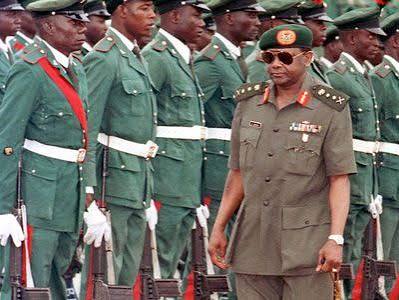
On August 13, 1994, eleven years to the day after the rigged 1983 polls, a bomb went off at the home of Nigeria’s transport minister, part of a campaign of attacks on government officials that unfolded as General Sani Abacha’s regime kept the winner of the annulled June 12, 1993 presidential election, Moshood Abiola, in detention. A second device would strike the labour minister’s home days later. Nigerian and international press at the time attributed the bombings to underground opposition figures, never conclusively identified, operating in the shadow of the National Democratic Coalition’s above-ground campaign for Abiola’s release. It marked a grim escalation: after a year of the state jailing pro-democracy activists, unionists, and journalists, some of Abacha’s opponents had concluded that peaceful pressure alone was not going to move him.
The Date That Keeps Recurring: August 14
No single date in this week’s history is stranger than August 14, which has marked three almost entirely unrelated turning points across three different decades.
In 1993, it was the date General Ibrahim Babangida set for a do-over presidential election, after annulling the genuinely contested June 12 vote that Abiola had won. Nigerians were not fooled: the Social Democratic Party announced it would boycott the new poll, fourteen of Nigeria’s thirty state governors said they would block it outright, and the Nigerian Labour Congress condemned the move. Babangida’s August 14 election never restored the legitimacy he was chasing; two weeks later, on August 27, he stepped aside altogether, handing power to an unelected Interim National Government that collapsed within months, clearing the way for Abacha’s coup.
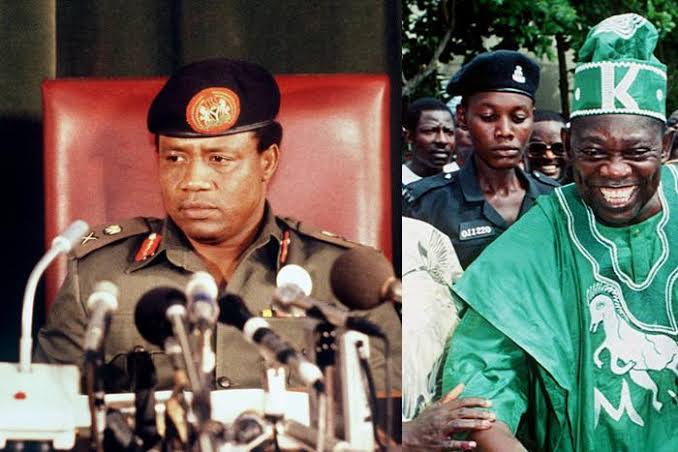
In 2006, the same date marked something rarer in Nigeria’s history: a peaceful, negotiated resolution to a decades-old territorial dispute. On August 14, Nigeria formally began transferring authority over the oil-rich Bakassi Peninsula to Cameroon, in compliance with a 2002 International Court of Justice ruling and the Greentree Agreement signed by Presidents Olusegun Obasanjo and Paul Biya. The transfer was not without controversy — many of the peninsula’s largely ethnic Efik residents objected to becoming Cameroonian citizens, and Nigeria retained administration of the southern portion for two more years, until a final handover completed the process on the same date in 2008, but it stood in sharp contrast to nearly everything else in this week’s history: a dispute that ended in a courtroom and a ceremony, not in bloodshed.
And in 2012, August 14 turned violent again: suspected Boko Haram militants attempted to assassinate Sheikh Ahmed Gumi, a prominent Islamic cleric who had positioned himself as a vocal critic of the sect. Like a similar attempt weeks earlier on the Emir of Fika, the attack failed to kill its intended target but left bystanders and security personnel dead, part of a pattern that year in which the group increasingly targeted religious and traditional authorities who spoke out against it.
2013: A Rare Diplomatic Win
On August 12, 2013, Nigeria became the first African country to both sign and ratify the United Nations Arms Trade Treaty, with Foreign Minister Olugbenga Ashiru framing the move as part of the country’s effort to keep small arms out of the hands of terrorists, pirates, and bandits at a moment when Boko Haram’s insurgency was intensifying in the northeast. Amnesty International welcomed the ratification and urged other African states to follow. It was a genuine, if largely symbolic, achievement, one of the few entries in this week’s history where Nigeria’s government acted ahead of a crisis rather than in response to one.
2021: A Week Along the Separatist Fault Line
The Council on Foreign Relations’ Nigeria Security Tracker recorded a densely violent stretch across the southeast and north-central states in this same week in 2021. On August 9, Nigerian naval officers killed six suspected members of the Indigenous People of Biafra (IPOB) in Oyi, Anambra State, one node in the long-running, often lethal confrontation between security forces and the separatist movement and its armed wing, the Eastern Security Network. The same day, gunmen killed four police officers and two civilians in nearby Nnewi, while sectarian violence left four dead in Ado, Benue State. Four days later, on August 13, two police officers and three suspected Eastern Security Network fighters died in a clash at a police station in Oguta, Imo State.
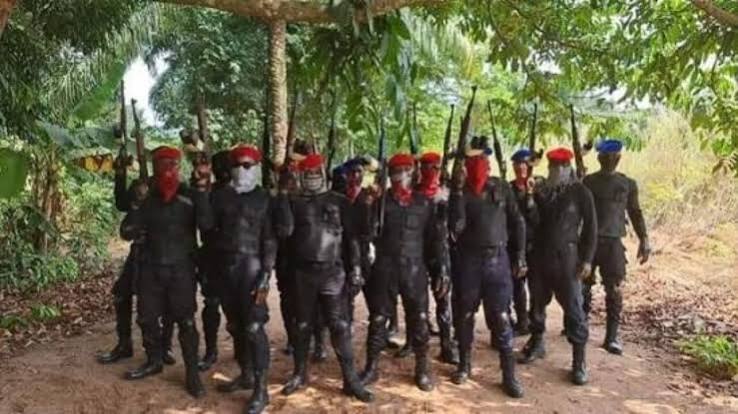
In between, the toll kept climbing elsewhere: kidnappers abducted nearly thirty people across two local government areas in Kwara State on August 7; five children were killed by a stray grenade in Ngala, Borno State, on August 12. None of these individually made international headlines, but together they illustrate how, by 2021, violence tied to the IPOB/ESN conflict had become as routine a feature of the security calendar as Boko Haram’s insurgency in the northeast.
2023: The Military Says No — For Now
On the night of August 11, 2023, amid a wave of successful military takeovers across West Africa and mounting online pressure for Nigeria’s own armed forces to intervene against a backdrop of economic hardship, the Defence Headquarters issued a pointed public rebuttal. In a statement from its director of defence information, Brigadier General Tukur Gusau, the DHQ declared that the military was “happy and better under democracy” and would not be drawn into any attempt to sabotage the country’s constitutional order, calling the online calls for a coup “highly unpatriotic” and “wicked.” The statement held through the remainder of 2024, with no coup, successful or attempted, materializing in Nigeria in the time since.
2024: The Protests That Wouldn’t Stop
By August 9 and 10, 2024, the #EndBadGovernance protests that had erupted a week and a half earlier over the cost-of-living crisis and the Tinubu administration’s economic reforms were reaching their climax, with organizers associated with the Take It Back Movement leading a coordinated nationwide march before the demonstrations wound down on August 10. The security response, which Amnesty International would later document in a report titled “Bloody August,” left at least twenty-four peaceful protesters dead from police gunfire across Kano, Jigawa, Katsina, Borno, Niger, and Kaduna states, and resulted in more than a thousand arrests nationwide, including at least one journalist.
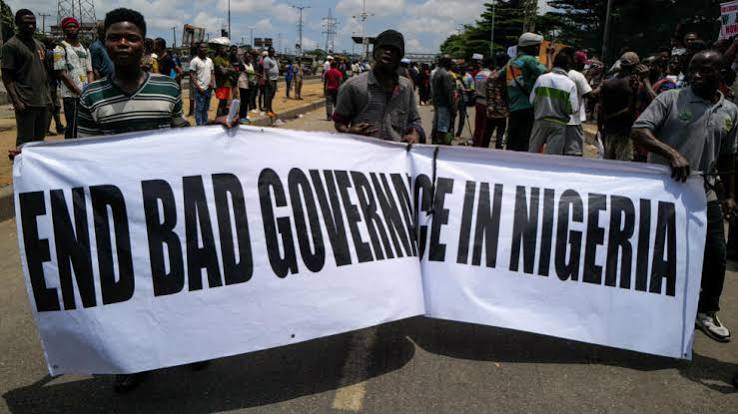
Security forces also raided the Nigeria Labour Congress headquarters in Abuja looking for protest-related materials, and more than two dozen minors, some as young as their early teens, faced treason charges over their alleged participation, before public pressure led the president to order their release and the launch of an investigation into the officials responsible for the prosecutions.
As of the close of 2024, no member of the security forces had been publicly prosecuted for any of the twenty-four deaths.
A Week That Cuts Every Way at Once
What sets this week apart from most others in this series is that it resists a single storyline. In 1983 and 2024, forty-one years apart, rigged politics and peaceful protest both ended the same way: bodies in the street and no one held responsible. In 1994, it was the regime’s opponents planting bombs; in 2012, an armed sect targeting a cleric; in 2021, a separatist conflict claiming lives on both sides of the fight. And twice, in 2006 and again in 2013, this week produced something almost out of place in this history: a government choosing negotiation over force, and being recognized for it. Read together, these entries argue against a simple story of villains and victims, and toward a harder truth: five decades in, Nigeria has never fully settled who gets to use force, against whom, and with what consequence, but this week also proves that the country has, on occasion, chosen differently.