

August 23-29 in Nigeria’s Human Rights History

From one general’s rise and, exactly eight years later, the same general’s fall, to a publisher gunned down outside his own home, a waterfront community bulldozed in a single weekend, a damning tally of rural killings, and a raid on a private party, the final week of August has repeatedly been when Nigeria’s power struggles, and its unresolved cruelties, reached a breaking point
Across the five weeks this series has now covered in August’s history, few periods carry as strange a symmetry as this one. The same man came to power in this exact week and, eight years later, almost to the day, was forced out of it in this same week , and both times, the language of human rights was central to how the moment was justified. Around that symmetry sit four other entries with nothing in common except the week on the calendar: a publisher’s unsolved murder, a waterfront community erased overnight, a rights group’s tally of a rural killing spree, and a police raid on a private party.
1985 and 1993: One General’s Rise and Fall, Eight Years Apart
At six o’clock on the morning of August 27, 1985, while General Muhammadu Buhari was away on the Hajj pilgrimage to Mecca, his own Chief of Army Staff, Major-General Ibrahim Babangida, announced over Radio Nigeria that Buhari’s government had been overthrown. The coup broadcast framed itself explicitly as a human rights correction: it accused Buhari of detaining people without trial, muzzling the press, and executing convicted drug traffickers under a retroactively applied decree. In his own address that day, Babangida repealed Decree 4, the law that had jailed journalists Tunde Thompson and Nduka Irabor for embarrassing the government, and ordered the release of everyone still held under it. Buhari himself would spend the next three years in detention in Benin City.
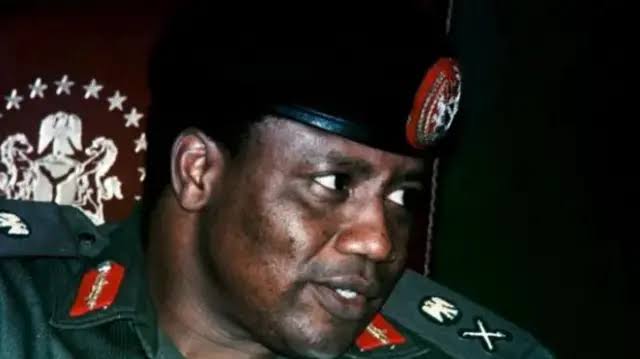
The irony did not take long to surface. Babangida kept Decree 2, the provision allowing indefinite detention of anyone deemed a security risk, and used it freely across his own eight years in power. Exactly eight years and one day after his coup speech , on August 26, 1993, Babangida himself was forced to resign, undone by the same crisis of legitimacy he had once accused Buhari of causing: his annulment of the free and fair June 12 presidential election two months earlier had made his own government ungovernable. He handed power to an unelected Interim National Government under Ernest Shonekan, which would itself collapse within three months to General Sani Abacha’s coup. Two human rights emergencies, one general, and almost the same week on the calendar, eight years apart.
1994: A Labour Movement Dismantled by Decree
A year into Abacha’s rule, the same standoff over the annulled June 12 election produced one of the more methodical crackdowns this series has documented. On August 17, 1994, Abacha’s government dissolved the executive councils of the Nigeria Labour Congress and the country’s oil unions outright. On August 23, Reuters reported that the sacked oil union leaders were back in court contesting their removal. Two days later, on August 25, NLC president Pascal Bafyau filed suit at the Federal High Court in Lagos challenging the dissolution, a case that new decrees barring courts from questioning the government’s actions had already rendered moot before it could be heard. By August 29, the crackdown had reached the movement’s grassroots: the Abia State NLC chairman, A.C.B. Agbarueze, was declared a wanted man following a pro-democracy protest, and when he could not be found, his wife was arrested and detained in his place for several days. Human Rights Watch, documenting the episode that October, described a government that had made legal recourse itself the next thing to be shut down.
2002: A Publisher Gunned Down, and a Case Left to Die
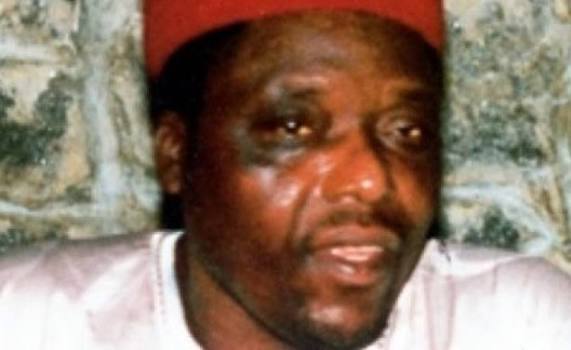
On the night of August 29, 2002, Victor Nwankwo, managing director of Fourth Dimension Publishing Company and younger brother of pro-democracy activist Arthur Nwankwo, was ambushed and shot dead outside his own gate in Enugu, hours after visiting his brother’s house and shortly before he was due to travel to Zimbabwe. Two police sergeants and a night guard were reportedly stationed nearby at the time of the attack but rendered no assistance. The World Organisation Against Torture, taking up the case that September, documented an investigation so poorly handled that a suspect was arrested despite getting the name of the street wrong, and warned that the authorities appeared to be closing the case prematurely rather than pursuing the actual perpetrators. More than two decades on, no one has ever been convicted of Victor Nwankwo’s murder.
2009: A Waterfront Erased in a Weekend
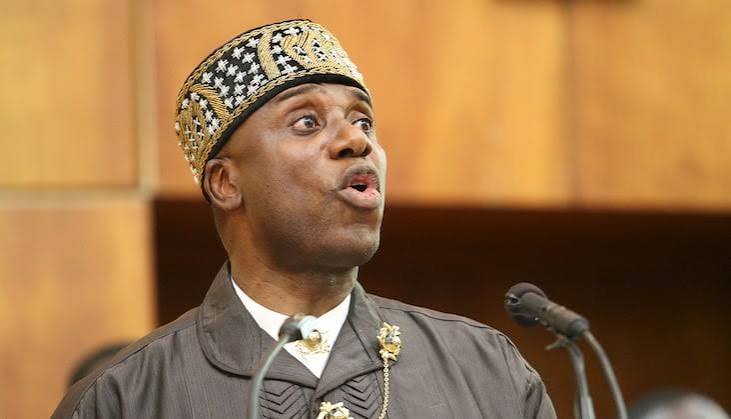
On August 28, 2009, under orders from Rivers State Governor Chibuike Rotimi Amaechi, bulldozers escorted by roughly thirty members of the Nigerian military moved into the Njemanze waterfront settlement in Port Harcourt and flattened it. Residents were given no meaningful notice; families returned from work or market to find their homes reduced to rubble, with no time to save their belongings. Amnesty International later estimated that between 13,800 and 19,000 people were left homeless in a single weekend, part of a wider plan that threatened some 45,000 residents across the Njemanze and Abonnema Wharf settlements without genuine consultation. Two years later, on the anniversary of the demolition, former residents were still gathering to demand a justice that had not arrived, even as the cleared land sat undeveloped behind them.
2020: A Reckoning on Paper, and Blood on the Ground
On August 24, 2020, Amnesty International published findings that gunmen had killed at least 1,126 people across rural northern Nigeria since the start of that year, with southern Kaduna State alone accounting for at least 366 deaths. The report placed the blame squarely on the state: security forces, Amnesty said, had repeatedly failed to heed warnings or respond in time, and not a single perpetrator had been brought to justice, leaving villagers who dared ask for more protection facing arrest instead of help.
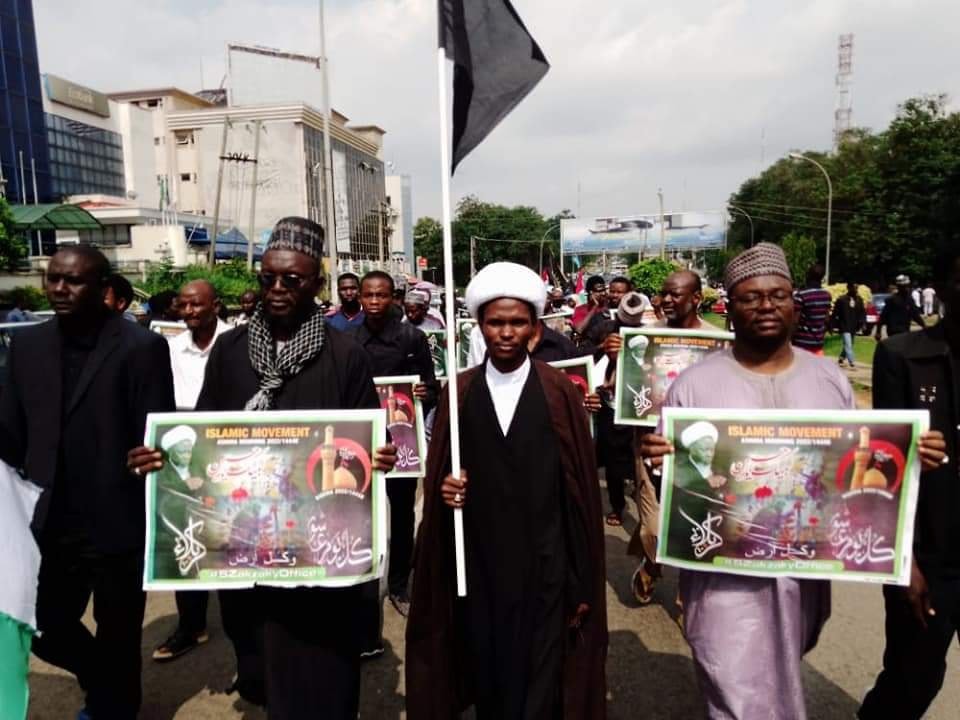
The same week bore out the report’s warning in real time. On August 22, police killed three Shiite worshippers in Kaduna, the latest flashpoint in the long-running, often lethal confrontation between security forces and the Islamic Movement in Nigeria that this series has traced back to Zaria in 2014 and 2015. The following day, August 23, a clash in Emene, in Enugu East, Enugu State, left two State Security Service operatives and, by local and IPOB accounts, as many as twenty-one suspected Indigenous People of Biafra members dead , one of the highest single-incident tolls this series has documented in the long-running fight between Nigerian security forces and the separatist movement. Nigerian troops killed fifteen ISWAP leaders in Ngala, Borno State, on August 24, while gunmen attacked a school in Chikun, Kaduna State the same day, killing one and kidnapping seven students and a teacher.
2023: A Party Raided, a Law Weaponized
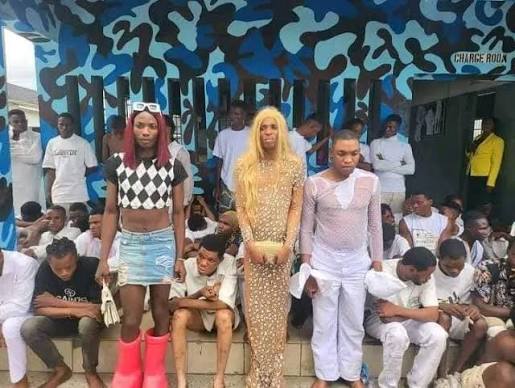
On August 27, 2023, police in Delta State raided a hotel in Ekpan, Uvwie local government area, after a tip-off obtained during the interrogation of a cross-dressing party guest, and arrested roughly 200 people attending what guests described as an “all-white party.” Police alleged it was a same-sex wedding ceremony and, invoking Nigeria’s 2014 Same Sex Marriage (Prohibition) Act, ultimately held 67 to 69 of those detained, who were remanded in prison for two weeks before some were granted bail. Amnesty International’s Nigeria office condemned the raid as part of a pattern of mass arrests it called a “witch-hunt,” noting that a law ostensibly about marriage was increasingly being used to justify sweeping, warrantless detentions of anyone present at a private gathering, gay or not.
A Week of Endings, and Cases Without One
What ties this week together, more than any other in this series, is how often it has marked the end of something, a regime, a labour movement’s legal options, a waterfront community’s existence overnight,while leaving the actual reckoning unfinished. Buhari’s ouster and Babangida’s own eight years later both closed one chapter of abuse only to open another. Victor Nwankwo’s killer was never found. No one was ever prosecuted for Njemanze. Amnesty’s 1,126 dead came with a body count but, as the group itself noted, no perpetrators brought to justice. Even the Delta State raid, for all its speed and publicity, produced no clear resolution beyond prison remand and bail. That the coup which opened this week’s history in 1985 framed itself as a correction to exactly this kind of impunity, only to be undone eight years later by the same failure to close a case, is perhaps this week’s clearest and most uncomfortable lesson.